
Anúncios
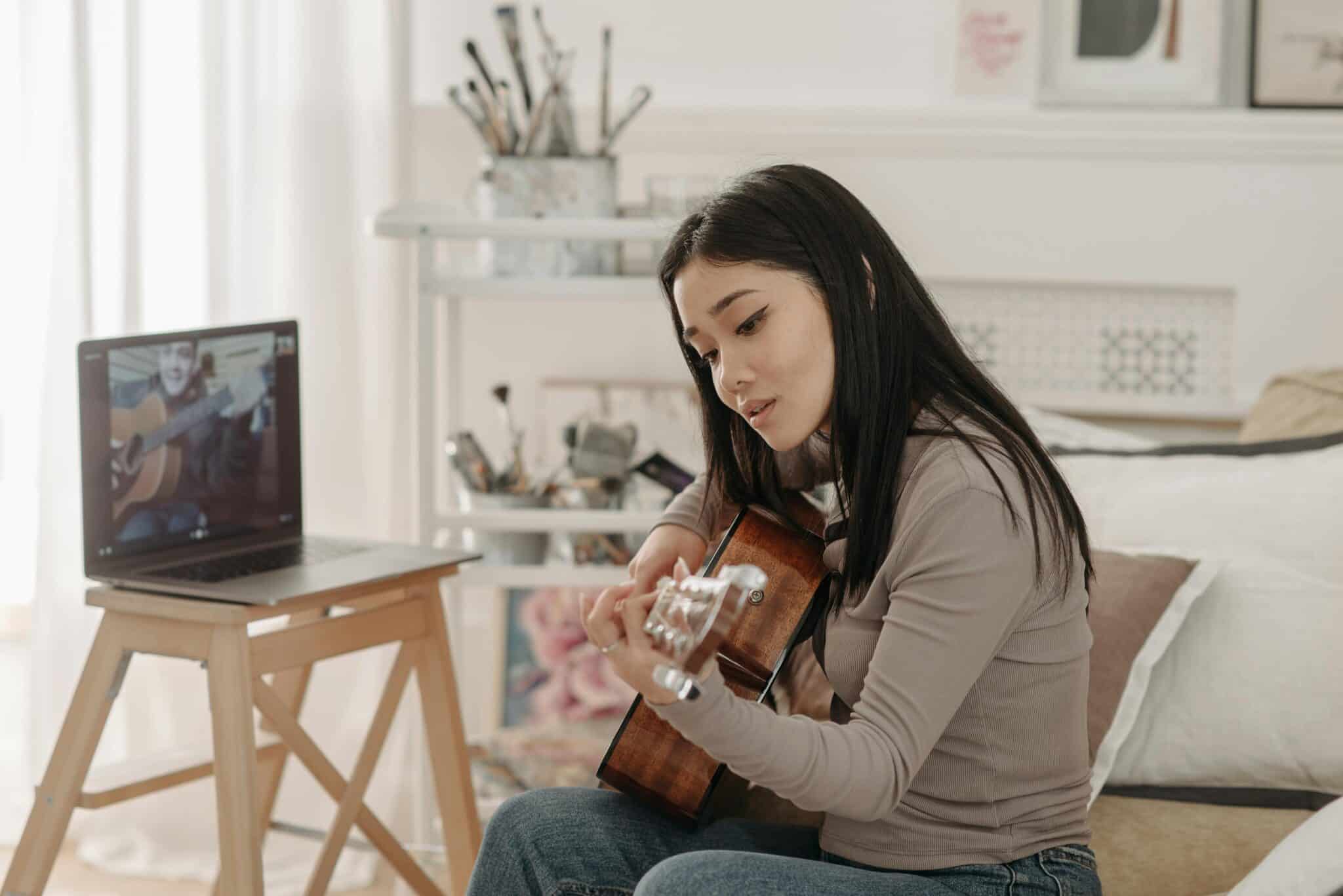
Learning to play the guitar at home has never been easier. With the right guidance and a bit of dedication, you can start playing your favorite songs today.



The guitar remains one of the most popular instruments worldwide, captivating millions with its versatility and expressive sound. Whether you dream of strumming around a campfire, performing on stage, or simply enjoying music as a personal hobby, beginning your guitar journey from the comfort of your home is entirely achievable.
Anúncios
Modern technology and accessible learning methods have transformed how we approach musical education. Gone are the days when expensive lessons and rigid schedules were the only pathways to musical proficiency. Today, anyone with determination and a guitar can embark on this rewarding adventure without leaving their living room.
🎸 Why Starting Guitar at Home Makes Perfect Sense
Learning guitar in your own space offers unparalleled advantages that traditional lessons simply cannot match. You control the pace, environment, and schedule entirely according to your personal needs and lifestyle.
Anúncios
Home practice eliminates the stress of performing before strangers during those awkward beginner stages. You can make mistakes freely, repeat exercises as many times as needed, and develop confidence at your own rhythm. This psychological comfort accelerates learning significantly, allowing your brain to absorb techniques without performance anxiety.
Financial savings represent another compelling benefit. Professional guitar lessons typically cost between $30 to $60 per hour, accumulating to substantial expenses over months. Home learning leverages free or affordable resources, from YouTube tutorials to comprehensive apps, making musical education accessible regardless of budget constraints.
Flexibility stands as perhaps the greatest advantage. Busy professionals, students, parents, and anyone with irregular schedules can practice during early mornings, late evenings, or lunch breaks. This adaptability ensures consistent progress without disrupting daily responsibilities.
🎯 Setting Yourself Up for Success From Day One
Before diving into chords and melodies, establishing the right foundation determines your long-term success and enjoyment. Proper preparation prevents frustration and builds sustainable practice habits.
Choosing Your First Guitar
Selecting the appropriate instrument matters more than many beginners realize. Acoustic guitars offer portability and require no additional equipment, making them ideal for home learners. Their slightly thicker strings build finger strength effectively, though they may initially cause minor discomfort.
Classical guitars feature nylon strings that feel gentler on fingertips, perfect for absolute beginners concerned about finger pain. Their wider necks provide more spacing between strings, reducing accidental string touching. However, their sound differs from steel-string acoustics, which might not suit everyone’s musical preferences.
Electric guitars require amplifiers but offer thinner, softer strings that demand less finger pressure. They excel for rock, blues, and jazz enthusiasts. However, the additional equipment increases initial costs and complexity for home practice.
Creating Your Practice Space
Designating a specific area for guitar practice reinforces commitment and routine. This space doesn’t need elaborate setup—simply a comfortable chair, good lighting, and minimal distractions suffice.
Keep your guitar easily accessible rather than stored in a case. Instruments within arm’s reach get played more frequently. A sturdy guitar stand positioned prominently serves as a visual reminder and invitation to practice daily.
Consider acoustics and privacy. While you shouldn’t worry excessively about disturbing others initially, being mindful creates a more relaxed practice environment. Inform household members about your practice schedule to minimize interruptions during focused sessions.

📚 Fundamental Techniques Every Beginner Must Master
Building proper technique from the beginning prevents bad habits that become increasingly difficult to correct later. These foundational skills form the bedrock of your entire guitar journey.
Holding the Guitar Correctly
Proper posture affects both sound quality and physical comfort during extended practice sessions. Sit upright with the guitar’s waist resting on your dominant leg. The neck should angle slightly upward, allowing your fretting hand to move freely without excessive wrist bending.
Your strumming arm drapes naturally over the guitar’s body, with your wrist positioned over the soundhole. Avoid hunching forward or twisting your spine. These postural mistakes cause unnecessary fatigue and potential long-term strain.
The guitar should feel stable without requiring hand support. If you constantly readjust position, experiment with different seating heights or consider using a footstool under your non-dominant leg for classical positioning.
Understanding the Fretboard
The guitar neck consists of frets—metal strips dividing the neck into semitone intervals. Frets are numbered from the headstock toward the body, with the first fret closest to the tuning pegs.
Each string produces different notes when pressed behind various frets. The thickest string (low E) sits at the top when holding the guitar, while the thinnest (high E) runs along the bottom. This counterintuitive arrangement confuses many beginners initially but becomes second nature with practice.
Learning string names proves essential for following tutorials and chord diagrams: E (6th/thickest), A (5th), D (4th), G (3rd), B (2nd), and E (1st/thinnest). Memorable phrases like “Eddie Ate Dynamite, Good Bye Eddie” help memorize this sequence.
Developing Finger Strength and Dexterity
Your fretting hand requires significant finger independence and strength initially lacking in most beginners. Regular practice naturally develops these attributes, but specific exercises accelerate progress.
The “spider walk” exercise involves placing each finger on consecutive frets along a single string, then moving to the next string. This simple drill builds coordination and muscle memory while familiarizing you with fretboard geography.
Expect initial finger discomfort. Calluses develop on fingertips after consistent practice, creating a protective layer that eliminates pain. This process takes several weeks but represents a normal and necessary adaptation. Avoid over-practicing to the point of severe pain or blistering, which can interrupt progress.
🎵 Your First Chords: The Gateway to Countless Songs
Chords form the harmonic foundation of most music. Mastering just a handful of basic chords unlocks hundreds of popular songs, providing immediate gratification and motivation.
Starting With Open Chords
Open chords incorporate unfretted strings, creating rich, resonant sounds perfect for beginners. The most essential starter chords include E minor, A minor, D major, G major, and C major.
E minor requires only two fingers, making it the easiest chord for absolute beginners. Place your middle finger on the second fret of the A string and your ring finger on the second fret of the D string. Strum all six strings together, listening for clear, ringing tones.
If strings sound muted or buzzy, check that your fingers press firmly behind the frets (not directly on them) and that your fingertips approach the strings at steep angles rather than lying flat. These adjustments dramatically improve chord clarity.
Transitioning Between Chords Smoothly
Chord changes challenge beginners more than forming individual chord shapes. The secret lies in identifying common finger positions between different chords, allowing certain fingers to remain anchored while others move.
Practice transitions slowly and deliberately rather than rushing. Perfect accuracy at slow speeds gradually increases as muscle memory develops. Use a metronome or tapping foot to maintain steady rhythm during chord progressions.
The “1-minute change” drill proves remarkably effective: set a timer and count how many times you can switch between two chords cleanly in sixty seconds. Record your number and try beating it during subsequent practice sessions. This gamification makes tedious exercises engaging while tracking measurable progress.
🎼 Strumming Patterns That Bring Music to Life
Chords provide harmony, but strumming patterns create rhythm and energy. Even simple songs become compelling when performed with appropriate strumming dynamics and timing.
Begin with basic downstrokes—moving your strumming hand downward across the strings in steady, even motions. Maintain relaxed wrist movement rather than stiff arm motion. The wrist acts like a hinge, creating fluid, natural strokes.
Once comfortable with consistent downstrokes, introduce upstrokes by brushing upward across the strings immediately after downward strums. This down-up pattern forms the basis of countless songs across all genres.
Rhythm notation often uses symbols like “D” for down and “U” for up. A common beginner pattern looks like: D-D-U-U-D-U. Practice this slowly with a metronome, gradually increasing tempo as coordination improves. Eventually, your strumming hand moves almost unconsciously, freeing mental energy for chord changes and singing.
Adding Dynamics and Expression
Varying strumming intensity transforms mechanical playing into musical performance. Lighter strums during verses build anticipation, while powerful strums during choruses release energy effectively.
Experiment with palm muting—lightly resting the edge of your strumming hand on the strings near the bridge. This technique creates percussive, muted tones popular in rock and funk styles.
Accent certain beats by strumming harder on specific strokes. Emphasizing beats one and three in 4/4 time creates driving rhythm, while accentuating offbeats produces funky, syncopated feels. These subtle variations distinguish amateur playing from expressive musicianship.
📱 Leveraging Technology for Accelerated Learning
Modern guitar students enjoy unprecedented access to learning tools that make home practice more effective and enjoyable than ever before. Embracing these resources accelerates your progress significantly.
Mobile Apps That Actually Work
Interactive guitar apps provide structured lessons, real-time feedback, and gamified progression systems that maintain motivation during challenging phases. These platforms listen through your device’s microphone, analyzing your playing accuracy and offering immediate corrections.
Quality apps break complex skills into manageable micro-lessons, ensuring you never feel overwhelmed. They adapt to your pace, spending extra time on difficult concepts while advancing quickly through material you master easily.
Many applications include massive song libraries with chord charts, tablature, and play-along tracks. This combination of instruction and practical application reinforces learning while keeping practice sessions engaging and musical rather than purely technical.
YouTube: Your Free Guitar Teacher
YouTube hosts countless talented guitar instructors offering free lessons covering every skill level and musical style imaginable. The visual format helps beginners understand hand positions, finger movements, and techniques that written descriptions cannot fully convey.
Subscribe to multiple channels rather than relying on a single instructor. Different teaching styles resonate with different learners, and varied perspectives prevent stagnation. Popular channels often feature weekly lessons, creating structured curricula comparable to paid courses.
Take advantage of YouTube’s playback speed controls. Slowing videos to 0.75x or 0.5x speed allows you to observe complex techniques in detail. Conversely, skipping through familiar material saves time during longer tutorial videos.
Online Tablature and Chord Resources
Websites offering guitar tablature (simplified musical notation) and chord charts provide instant access to virtually any song you wish to learn. These resources eliminate the need for expensive sheet music books while offering user ratings that identify the most accurate transcriptions.
Many platforms include interactive features allowing you to adjust tempo, loop difficult sections, and even change song keys to match your vocal range. These tools transform challenging songs into accessible learning opportunities.
🏆 Building Effective Practice Routines
Consistent, focused practice trumps occasional marathon sessions every time. Developing sustainable routines ensures steady progress while preventing burnout and frustration.
Quality Over Quantity
Twenty minutes of concentrated, deliberate practice yields better results than two hours of unfocused noodling. During practice sessions, eliminate distractions completely—silence phones, close unnecessary browser tabs, and inform others you need uninterrupted time.
Structure each session with clear objectives. Rather than vaguely “practicing guitar,” set specific goals like “master the G to C chord transition” or “play the verse of Song X at 80 BPM cleanly.” This intentionality maintains focus and provides satisfying accomplishment markers.
The Power of Daily Consistency
Your brain consolidates new motor skills during sleep, making daily practice more effective than sporadic longer sessions. Even fifteen minutes daily produces better results than two hours once weekly.
Anchor guitar practice to existing daily habits for easier consistency. Practice immediately after morning coffee, before dinner, or following your evening workout. This habit-stacking technique leverages established routines, making new habits stick more reliably.
Balancing Technique and Enjoyment
Divide practice time between technical exercises and playing songs you love. Pure technical drilling builds skills but risks boredom, while only playing songs may neglect fundamental development. A 60/40 split favoring songs maintains motivation while ensuring proper skill progression.
When frustration strikes, shift to easier material or simply improvise freely. These mental breaks prevent practice from feeling like tedious work while maintaining your connection with the joy of making music.
🚀 Overcoming Common Beginner Challenges
Every guitarist encounters obstacles during their learning journey. Recognizing these challenges as normal and temporary prevents discouragement during difficult phases.
Finger Pain and Soreness
Initial finger discomfort represents the most common complaint among new players. This temporary condition improves dramatically within two to three weeks of consistent practice as calluses form.
If pain becomes severe or sharp rather than a dull pressure, you’re likely pressing too hard or practicing too long. Take breaks when discomfort intensifies, allowing fingers to recover. Gradually increasing practice duration allows natural adaptation without injury.
Feeling Like Progress Is Too Slow
Guitar learning involves plateaus where improvement seems invisible despite continued effort. These periods precede breakthroughs where multiple skills suddenly click together, propelling your abilities forward noticeably.
Recording yourself weekly provides objective progress evidence that daily practice obscures. Comparing recordings from a month ago reveals improvements you’ve stopped noticing, renewing motivation during plateau periods.
Struggling With Specific Techniques
Certain techniques naturally challenge different players based on hand size, flexibility, and previous experience. If a particular skill seems impossibly difficult, temporarily set it aside and return after developing related abilities.
Barre chords frustrate virtually all beginners initially. Rather than forcing them prematurely, develop finger strength through open chords and simpler exercises first. When you eventually return to barre chords with stronger hands, they’ll feel significantly more manageable.
🎤 Playing Your First Complete Song
Nothing motivates like successfully playing an entire song from beginning to end. This milestone transforms you from someone learning guitar into someone who plays guitar—a powerful psychological shift.
Choose songs with simple chord progressions and slower tempos initially. Three-chord songs in keys like G major, D major, or A minor offer accessible entry points. Popular campfire classics often use repetitive structures perfect for reinforcing newly learned chords.
Don’t worry about perfection. Your first complete song performances will include mistakes, hesitations, and rough transitions—and that’s absolutely fine. The accomplishment lies in maintaining rhythm and reaching the final chord, not flawless execution.
Share your achievement with supportive friends or family, even if nervousness makes you uncomfortable. Performance, however informal, accelerates learning by creating memorable experiences that reinforce skills differently than private practice.
🌟 Expanding Your Skills Beyond Basics
Once foundational chords and strumming patterns feel comfortable, an entire universe of advanced techniques awaits exploration. This progression never truly ends—even professional guitarists continually discover new approaches and styles.
Fingerpicking opens melodic possibilities beyond strumming, allowing you to play bass lines, chords, and melodies simultaneously. This technique particularly suits folk, classical, and singer-songwriter styles, creating intricate arrangements with a single guitar.
Lead guitar techniques like bends, hammer-ons, pull-offs, and slides add expressive nuance to melodies. These embellishments transform simple note sequences into vocal-like phrases that sing and cry with emotional depth.
Music theory knowledge, while not strictly necessary, deepens your understanding and creativity. Learning how chords relate, why certain progressions sound pleasing, and how scales work over different harmonies unlocks compositional abilities and improvisation skills.
💪 Staying Motivated for the Long Journey
Guitar mastery represents a lifelong pursuit rather than a destination. Maintaining enthusiasm throughout this extended journey requires intentional motivation strategies.
Set both short-term and long-term goals. Short-term objectives provide frequent accomplishments that maintain momentum, while long-term aspirations give purpose and direction. Write these goals down and review them regularly, adjusting as your interests and abilities evolve.
Connect with other learners through online communities, local jam sessions, or music forums. Sharing struggles, celebrating progress, and receiving encouragement from fellow guitarists combats isolation and provides fresh perspectives on common challenges.
Remember why you started. Whether seeking creative expression, stress relief, social connection, or simply the joy of music, reconnecting with your initial motivation during difficult periods rekindles enthusiasm and commitment.
🎸 Your Musical Journey Starts Right Now
The guitar in your hands or the one you’re about to acquire represents more than wood, strings, and metal. It’s a gateway to creativity, self-expression, and lifelong enjoyment. Every master guitarist once sat exactly where you are now—uncertain, inexperienced, but willing to begin.
Your home provides the perfect environment for this transformative journey. Without judgment, time pressure, or external expectations, you’re free to explore, make mistakes, and discover your unique musical voice at your own pace.
The practical methods and resources available today make learning guitar more accessible than any previous generation enjoyed. Technology hasn’t replaced the fundamental joy of creating music with your own hands—it’s simply removed barriers that once prevented countless potential guitarists from ever starting.
Take that first step today. Pick up your guitar, form that first chord, and produce your first intentional sounds. They won’t be perfect, polished, or professional—but they’ll be yours. Each subsequent practice session builds upon that initial moment, gradually transforming awkward finger positions into fluid movements and isolated notes into beautiful music.
The path ahead contains challenges, plateaus, and moments of frustration. It also promises achievements, breakthroughs, and profound satisfaction. Your future self—the guitarist you’ll become through persistent practice—will thank you for having the courage to begin this incredible journey right here, right now, in the comfort of your own home.
