
Anúncios
Learning Braille opens doors to a world of inclusive communication and literacy. Whether you’re visually impaired, working with accessibility, or simply curious, understanding Braille can transform how you interpret and connect with written language.



Braille isn’t just a series of raised dots on paper—it’s a complete tactile writing system that empowers millions worldwide. From reading books to navigating public spaces, Braille literacy provides independence and confidence. The good news? Modern technology has made learning Braille more accessible than ever before.
Anúncios
Thanks to innovative mobile applications, you can now discover, practice, and master Braille at your own pace. These digital tools combine interactive lessons, gamified challenges, and real-world practice to make the learning journey engaging and effective. Let’s explore how Braille works, why it matters, and which apps can help you succeed. 📱✨
🔤 What Exactly Is Braille and Why Does It Matter?
Braille is a tactile alphabet developed in the 1820s by Louis Braille, a blind French educator. Each character consists of a cell containing up to six raised dots arranged in two columns of three. By feeling these patterns with fingertips, readers can identify letters, numbers, punctuation, and even musical notation.
Anúncios
The system revolutionized literacy for people with visual impairments. Before Braille, blind individuals had limited access to written materials. Now, Braille appears on everything from medication labels to elevator buttons, making everyday navigation safer and more independent.
Understanding Braille also opens career opportunities in education, healthcare, accessibility consulting, and technology development. As digital accessibility becomes a global priority, Braille literacy continues to grow in relevance and demand.
The Basic Structure of Braille Characters
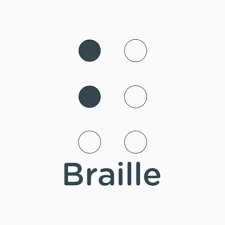
Standard Braille uses a six-dot cell, numbered from top to bottom: dots 1, 2, 3 on the left, and dots 4, 5, 6 on the right. Different combinations create 63 possible patterns, covering the entire alphabet, numbers, and common punctuation marks.
For example, the letter “A” consists of only dot 1. The letter “B” uses dots 1 and 2. As you progress, patterns become more complex, but the logic remains consistent. This systematic approach makes Braille learnable for people of all ages.
Beyond basic letters, contracted Braille (Grade 2) uses abbreviations and contractions to speed up reading and writing. It’s similar to shorthand in print, allowing experienced readers to process text more efficiently.
📚 The Different Grades of Braille You Should Know
Braille comes in multiple formats, each serving different purposes and skill levels. Understanding these variations helps you choose the right learning path and application.
Grade 1: Uncontracted Braille
This is the foundation level where each letter is spelled out completely. Grade 1 Braille has a one-to-one correspondence with standard print, making it ideal for beginners. Children often start with this format before progressing to more advanced systems.
Grade 1 works well for labeling, computer commands, and situations requiring precise spelling. It’s straightforward but takes longer to read and write than contracted forms.
Grade 2: Contracted Braille
This advanced system uses approximately 180 contractions and abbreviations. Common words like “the,” “and,” and “for” have single-character representations. This dramatically reduces the physical space needed and increases reading speed.
Most Braille books, documents, and digital content use Grade 2. Mastering it unlocks access to the vast majority of Braille literature and resources available worldwide.
Grade 3: Personal Shorthand
Grade 3 represents highly personalized abbreviations developed by individual users for note-taking and personal use. It’s not standardized and varies between writers, functioning like personal shorthand systems in print.
📱 How Mobile Apps Are Revolutionizing Braille Education
Traditional Braille instruction required specialized teachers, expensive materials, and significant time investment. Mobile applications have democratized this process, making quality Braille education accessible to anyone with a smartphone or tablet.
These apps use interactive touchscreen technology to simulate the tactile experience of Braille. Visual learners can see dot patterns while learning, and some apps even incorporate audio feedback to reinforce connections between Braille characters and their meanings.
Gamification elements transform practice sessions into engaging challenges. Progress tracking, achievement badges, and leveling systems maintain motivation throughout the learning journey. Many apps also offer community features where learners can connect, share experiences, and encourage each other.
Key Features to Look For in Braille Learning Apps
When selecting a Braille education app, prioritize these essential capabilities:
- Interactive lessons: Step-by-step tutorials that build skills progressively
- Practice modes: Drills and exercises to reinforce pattern recognition
- Real-world application: Tools to translate between print and Braille
- Accessibility features: VoiceOver/TalkBack compatibility for blind users
- Progress tracking: Visual dashboards showing learning advancement
- Offline functionality: Ability to practice without internet connection
The best apps combine educational rigor with user-friendly design. They accommodate different learning speeds and offer customization options to match individual preferences and needs.

🎯 Top Applications for Learning Braille Effectively
Several outstanding apps have emerged as leaders in Braille education. Each offers unique strengths suited to different learning styles and goals.
Braille Tutor: Comprehensive Learning Platform
Braille Tutor provides structured lessons covering both Grade 1 and Grade 2 Braille. The app uses spaced repetition algorithms to optimize retention, presenting characters at intervals scientifically proven to enhance memory.
Interactive quizzes test recognition and comprehension, while the translation tool allows users to convert any text into Braille notation. The clean interface works seamlessly with screen readers, making it accessible for blind learners from the start.
Progress statistics show which characters need more practice, directing study efforts where they’ll have the greatest impact. The app also includes historical context about Louis Braille and the development of the system.
Braille Academy: Gamified Learning Experience
This app transforms Braille education into an adventure. Players progress through themed worlds, each focusing on different character sets and skill levels. Mini-games reinforce learning through pattern matching, speed challenges, and memory exercises.
Braille Academy excels at maintaining engagement, particularly for younger learners or those who struggle with traditional study methods. Achievement systems reward consistent practice, and leaderboards add a friendly competitive element.
The app includes a sandbox mode where users can freely explore and experiment with Braille patterns without pressure. This fosters creativity and builds confidence before tackling structured lessons.
Other Noteworthy Braille Learning Tools
Beyond the featured apps, several other platforms deserve mention. Braille Trainer focuses specifically on tactile learning, encouraging users to trace dot patterns on their screens. TypeInBraille teaches Braille keyboard input for digital communication.
Some apps specialize in specific languages or technical Braille systems, including music notation, mathematics, and scientific symbols. Exploring multiple apps can provide a well-rounded education covering all aspects of Braille literacy.
🧠 Effective Strategies for Mastering Braille Quickly
While apps provide excellent tools, learning strategies significantly impact success. These proven techniques accelerate Braille acquisition and improve retention.
Start With the Most Common Characters
Rather than learning alphabetically, begin with the most frequently used letters in your language. In English, that includes E, T, A, O, I, and N. Building recognition of common characters first enables you to practice with real words sooner.
This approach provides early wins that boost motivation and confidence. As you encounter these familiar characters repeatedly, recognition becomes automatic, freeing mental resources for learning new patterns.
Practice Multi-Sensory Learning
Engage as many senses as possible during study sessions. Say character names aloud while tracing their patterns. Write Braille on textured surfaces to develop tactile memory. Visualize dot arrangements in your mind during idle moments.
This multi-modal approach creates stronger neural pathways, making recall faster and more reliable. Different learning channels reinforce each other, building comprehensive understanding.
Establish Consistent Daily Practice
Short, regular practice sessions outperform occasional marathon study periods. Aim for 15-20 minutes daily rather than irregular lengthy sessions. Consistency builds habit and allows knowledge to consolidate between practices.
Many apps include reminder systems to help establish routine. Schedule practice at the same time each day—perhaps during your morning coffee or before bed—to build lasting habits.
Apply Learning to Real-World Contexts
As soon as possible, use your developing Braille skills in practical situations. Label household items, read Braille signage in public spaces, or transcribe favorite quotes. Real-world application makes learning relevant and memorable.
Consider volunteering with organizations serving blind communities. Teaching others reinforces your own knowledge while contributing meaningfully to accessibility efforts.
🌍 The Global Impact of Braille Literacy
Braille transcends individual benefit, creating ripple effects throughout communities and societies. When people gain Braille literacy, employment opportunities expand, educational outcomes improve, and social inclusion increases.
Unfortunately, Braille literacy rates have declined in recent decades. Reliance on audio technology has led some to deprioritize Braille instruction. However, research consistently shows that Braille readers achieve higher literacy levels, better spelling skills, and greater educational success than those relying solely on audio.
Organizations worldwide advocate for Braille instruction in schools and accessible materials in public spaces. World Braille Day, celebrated annually on January 4th (Louis Braille’s birthday), raises awareness about the continuing importance of tactile literacy.
Braille in the Digital Age
Technology hasn’t made Braille obsolete—it’s expanded its possibilities. Refreshable Braille displays connect to computers and smartphones, translating on-screen text into tactile characters. Digital Braille note-takers combine word processing with Braille input and output.
Modern websites increasingly incorporate Braille-compatible coding, ensuring assistive technologies can properly interpret content. Learning Braille now includes understanding how it interfaces with digital systems, preparing users for contemporary literacy demands.
🔍 Understanding Braille Beyond the Basics
Once you’ve mastered fundamental Braille, specialized systems open even more possibilities. Mathematical Braille uses unique symbols for equations, fractions, and geometric concepts. Music Braille enables blind musicians to read and write complex compositions.
Computer Braille includes additional characters representing programming symbols and technical notation. Foreign language Braille adapts the basic system to accommodate accented characters and non-Latin alphabets.
Each specialized system builds on foundational knowledge, so starting with standard literary Braille provides the essential groundwork for any future specialization.
💡 Overcoming Common Challenges in Braille Learning
Every learner encounters obstacles during their Braille journey. Recognizing common challenges and having strategies to address them prevents frustration and abandonment.
Distinguishing Similar Patterns
Some Braille characters differ by only one dot, making confusion common for beginners. Letters like D and F, or H and J, require careful attention. Create comparison charts highlighting differences, and practice these pairs specifically until distinctions become automatic.
Building Reading Speed
Initial Braille reading feels painfully slow. Resist the urge to rush. Speed develops naturally with practice as pattern recognition becomes instinctive. Focus on accuracy first; speed follows inevitably.
Timed exercises in apps can gradually increase reading pace without sacrificing comprehension. Challenge yourself with progressively complex material as comfort grows.
Maintaining Motivation During Plateaus
Learning curves include frustrating plateaus where progress seems to stall. During these periods, review fundamentals, explore new practice methods, or connect with learning communities for encouragement.
Apps with gamification elements help maintain engagement during difficult phases. Celebrating small victories—recognizing a word instantly, completing a challenging lesson—sustains momentum through inevitable rough patches.
🎓 Resources Beyond Mobile Applications
While apps provide excellent foundations, supplementing digital learning with additional resources creates comprehensive education. Many organizations offer free downloadable Braille charts, practice worksheets, and reference guides.
Local libraries often stock Braille books, and organizations like the National Library Service provide free Braille reading materials by mail. Tactile learning with physical Braille reinforces digital study and develops authentic reading skills.
Online communities, forums, and social media groups connect learners worldwide. Sharing experiences, asking questions, and encouraging fellow students enriches the learning journey and provides valuable support networks.
🌟 Starting Your Braille Learning Journey Today
There’s never been a better time to begin learning Braille. Modern apps remove traditional barriers, making this empowering skill accessible to anyone with curiosity and commitment. Whether you’re learning for personal growth, professional development, or to support someone in your life, Braille literacy opens new dimensions of understanding and connection.
Download a quality Braille learning app today and commit to just 15 minutes of daily practice. Within weeks, you’ll recognize basic characters. Within months, you’ll read simple words and phrases. The journey requires patience, but the destination—functional Braille literacy—rewards every moment invested.
Braille represents more than dots on a page or screen. It symbolizes accessibility, inclusion, and the fundamental human right to literacy. By learning Braille, you join a global movement ensuring everyone, regardless of visual ability, can participate fully in written communication and cultural exchange. 🚀📖
