
Anúncios
# HTML Article: FIFA World Cup – The Greatest Show on Earth ⚽🌍

The FIFA World Cup is more than just a tournament—it’s a global celebration of passion, culture, and the beautiful game.
Anúncios
Every four years, billions of fans across continents unite to witness history unfold on the pitch. Nations compete not just for a trophy, but for eternal glory and national pride. From legendary goals to unforgettable upsets, the World Cup delivers moments that transcend sport itself.
Whether you’re a die-hard football enthusiast or a casual viewer, the tournament offers something magical. The energy in stadiums, the tension of penalty shootouts, and the joy of underdog victories create memories that last a lifetime. Let’s dive into what makes this competition the pinnacle of international football.
Anúncios
🏆 The Origins and Evolution of the World Cup
The first FIFA World Cup took place in 1930 in Uruguay, with just 13 teams participating. Uruguay emerged as champions on home soil, defeating Argentina 4-2 in the final. This humble beginning laid the foundation for what would become the world’s most-watched sporting event.
Over the decades, the tournament expanded dramatically. From 16 teams in the 1950s to 32 teams from 1998 onwards, the World Cup became truly global. Starting in 2026, the competition will feature 48 teams, allowing more nations to experience the grandeur of football’s biggest stage.
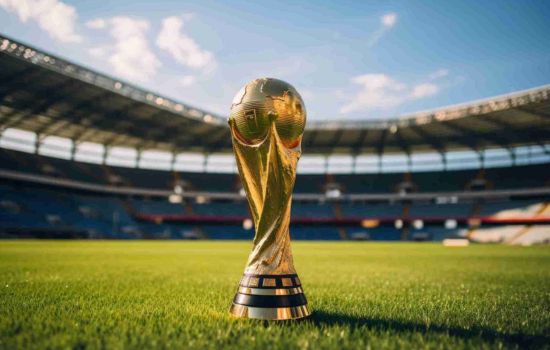
The trophy itself has evolved too. The original Jules Rimet Trophy was permanently awarded to Brazil after their third victory in 1970. The current FIFA World Cup Trophy, made of 18-carat gold, has been awarded since 1974 and remains one of the most recognizable symbols in sports.


⚡ Iconic Moments That Defined Football History
The World Cup has given us countless unforgettable moments. Pelé’s brilliance as a 17-year-old in 1958, Diego Maradona’s “Hand of God” and “Goal of the Century” in 1986, and Zinedine Zidane’s headbutt in 2006 all became part of football folklore.
Brazil’s dominance with five titles showcases their unmatched football heritage. Germany’s clinical efficiency led them to four championships. Italy and Argentina have each claimed the trophy multiple times, with Argentina’s dramatic 2022 victory in Qatar being particularly memorable.
🎯 The Greatest Upsets and Underdog Stories
Not everything goes according to script at the World Cup. South Korea’s semi-final run in 2002 stunned the football world. Costa Rica’s 2014 campaign saw them top a group containing Uruguay, Italy, and England before reaching the quarter-finals.
Perhaps no upset equals the United States defeating England 1-0 in 1950, dubbed the “Miracle on Grass.” More recently, Saudi Arabia’s shocking 2-1 victory over Argentina in 2022 proved that on any given day, football can deliver the unexpected.
🌟 Legendary Players and Their World Cup Legacies
Certain players are forever synonymous with World Cup excellence. Pelé remains the only player to win three World Cups (1958, 1962, 1970). His 12 goals in World Cup finals showcased extraordinary talent on the biggest stage.
Miroslav Klose holds the record for most World Cup goals with 16, scored across four tournaments. Lionel Messi finally captured his elusive World Cup title in 2022, cementing his status among the all-time greats. Cristiano Ronaldo, despite individual brilliance, still seeks that crowning achievement.

💫 Rising Stars and Future Icons
Every World Cup introduces new talent to the global stage. Kylian Mbappé announced himself with a stunning performance in 2018, winning the tournament at just 19 years old. His hat-trick in the 2022 final, despite France’s defeat, showcased superstar quality.
Young players like Pedri, Gavi, Jude Bellingham, and Vinícius Júnior represent the next generation ready to leave their mark. The World Cup serves as the ultimate platform where emerging talents become household names overnight.
🎪 The Cultural Impact Beyond Football
The World Cup transcends sport, becoming a cultural phenomenon that unites diverse populations. Streets empty during matches, productivity drops worldwide, and strangers become friends through shared passion. The tournament generates economic benefits for host nations while putting their culture on display for billions.
National anthems become war cries. Jersey sales skyrocket. Social media explodes with memes, reactions, and celebrations. The World Cup creates a month-long global festival where differences fade and humanity connects through the universal language of football.
🌈 Diversity and Representation on the World Stage
The tournament showcases football’s global reach. African teams like Cameroon, Senegal, and Morocco have provided thrilling performances and inspired continents. Asian nations continue improving, with Japan and South Korea leading the charge. CONCACAF representatives regularly spring surprises, proving talent exists everywhere.
This diversity enriches the competition, bringing various playing styles and tactical approaches. European technique meets South American flair, African athleticism challenges Asian discipline, creating a beautiful mosaic of football philosophies.
📊 Tournament Format and Qualification Process
Qualifying for the World Cup represents a years-long journey. Confederations conduct regional qualifiers where hundreds of nations compete for limited spots. UEFA typically receives the most places, followed by CONMEBOL, CAF, AFC, CONCACAF, and OFC.
The tournament format begins with group stages, where teams face three opponents. The top two from each group advance to knockout rounds, where a single loss means elimination. This creates drama, as teams must balance ambition with caution, knowing mistakes can end dreams instantly.
⚽ Tactical Evolution Through the Decades
Football tactics have evolved dramatically through World Cup history. The 1950s emphasized individual brilliance. The 1970s brought “Total Football” from the Netherlands. The 1980s and 1990s saw defensive strategies dominate. Modern World Cups feature high pressing, quick transitions, and sophisticated data analysis.
Coaches like Rinus Michels, Carlos Bilardo, Vicente del Bosque, and Didier Deschamps left tactical legacies. The tournament serves as a laboratory where innovative approaches are tested against the world’s best, influencing club football for years afterward.
🏟️ Host Nations and Memorable Venues
Hosting the World Cup represents immense prestige and responsibility. Countries invest billions in infrastructure, stadiums, and logistics. Brazil’s Maracanã, England’s Wembley, and Mexico’s Azteca have hosted multiple finals, becoming sacred grounds for football fans.
The 2022 Qatar World Cup marked the first held in the Middle East, featuring innovative stadium designs and winter scheduling. The 2026 tournament will be co-hosted by the United States, Mexico, and Canada, the first with three nations and 48 teams.
🎉 Fan Culture and Atmosphere
World Cup supporters create unmatched atmospheres. Brazilian samba, Mexican waves, Argentine passion, and English chants transform stadiums into cauldrons of emotion. Face paint, flags, costumes, and songs become expressions of national identity.
Fan zones in host cities allow millions without tickets to experience the festival atmosphere. Giant screens, cultural performances, and food from participating nations create inclusive celebrations accessible to everyone.
💰 Economic and Commercial Aspects
The World Cup generates billions in revenue through broadcasting rights, sponsorships, merchandise, and tourism. FIFA distributes funds to member associations, supporting grassroots development worldwide. Host nations see infrastructure improvements, though debates continue about long-term economic benefits.
Sponsors like Coca-Cola, Adidas, and Visa invest heavily, associating their brands with football’s premier event. Player endorsements surge, with World Cup performances directly impacting market value and commercial opportunities.
🔮 Looking Ahead to Future Tournaments
The 2026 World Cup across North America promises unprecedented scale. With 48 teams, 16 host cities, and expanded format, it will redefine tournament logistics. Mexico City’s altitude, Miami’s heat, and Vancouver’s climate will present unique challenges.
Future hosts include Morocco, potentially bringing the tournament back to Africa. Technology continues advancing, with VAR now standard and semi-automated offside technology debuting in 2022. The evolution never stops, ensuring each edition offers something new.
🌍 Growing the Global Game
FIFA invests World Cup profits into developing football in underrepresented regions. Training centers, coaching education, and youth programs help nations build sustainable football cultures. The goal remains making the beautiful game truly accessible worldwide.
Women’s football also benefits from World Cup success. The FIFA Women’s World Cup grows in popularity, showcasing incredible talent and inspiring the next generation. Gender equality in football advances with each tournament.
🎬 Media Coverage and Digital Innovation
Broadcasting technology transforms how fans experience the World Cup. From black-and-white broadcasts to 4K streams, production quality constantly improves. Multi-angle replays, tactical cameras, and player-tracking data provide deeper insights into matches.
Social media changed fan engagement forever. Millions follow matches through Twitter reactions, Instagram stories, and TikTok highlights. Official apps provide live scores, statistics, and fantasy leagues, keeping fans connected throughout the tournament.
⚖️ Controversies and Challenges
The World Cup hasn’t avoided controversy. Bidding processes faced corruption allegations, leading to investigations and reforms. Human rights concerns surrounded certain host selections, sparking important conversations about labor conditions and social policies.
On-field controversies include disputed goals, referee decisions, and occasional violence. VAR technology aimed to reduce errors but introduced new debates. These challenges remind us that even at football’s highest level, perfection remains elusive.
🏅 Why the World Cup Matters
Beyond trophies and records, the World Cup represents hope, unity, and shared humanity. For one month, the world focuses on something positive, celebrating talent, dedication, and sporting excellence. Children dream of representing their countries, inspired by heroes wearing national colors.
The tournament proves sport’s power to transcend politics, economics, and geography. When that ball rolls, nothing else matters except the beautiful game unfolding before billions of eyes. This is why the World Cup remains irreplaceable—it’s not just football, it’s a global celebration of everything that makes the sport magical.
Whether you’re celebrating a last-minute winner, heartbroken by a penalty miss, or amazed by a moment of individual brilliance, the World Cup delivers emotions impossible to find elsewhere. It’s humanity at its most passionate, vulnerable, and joyful—united by 22 players, one ball, and dreams that span continents.
